
Selling a property you inherited in Spain: the gain, the plusvalía, and why the inheritance-tax value decides both
The death of the owner produces no taxable gain, and the heir starts again from the value under the inheritance-tax rules, plus the taxes and expenses of inheriting. That value decides the income tax on a later sale, 19 to 30 per cent for a resident and 19 per cent for a seller abroad, and it is the value the town hall compares for the plusvalía. In the Canaries, where close relatives apply a 99.9 per cent rebate, declaring a low value on inheriting saves almost nothing and costs on the sale.
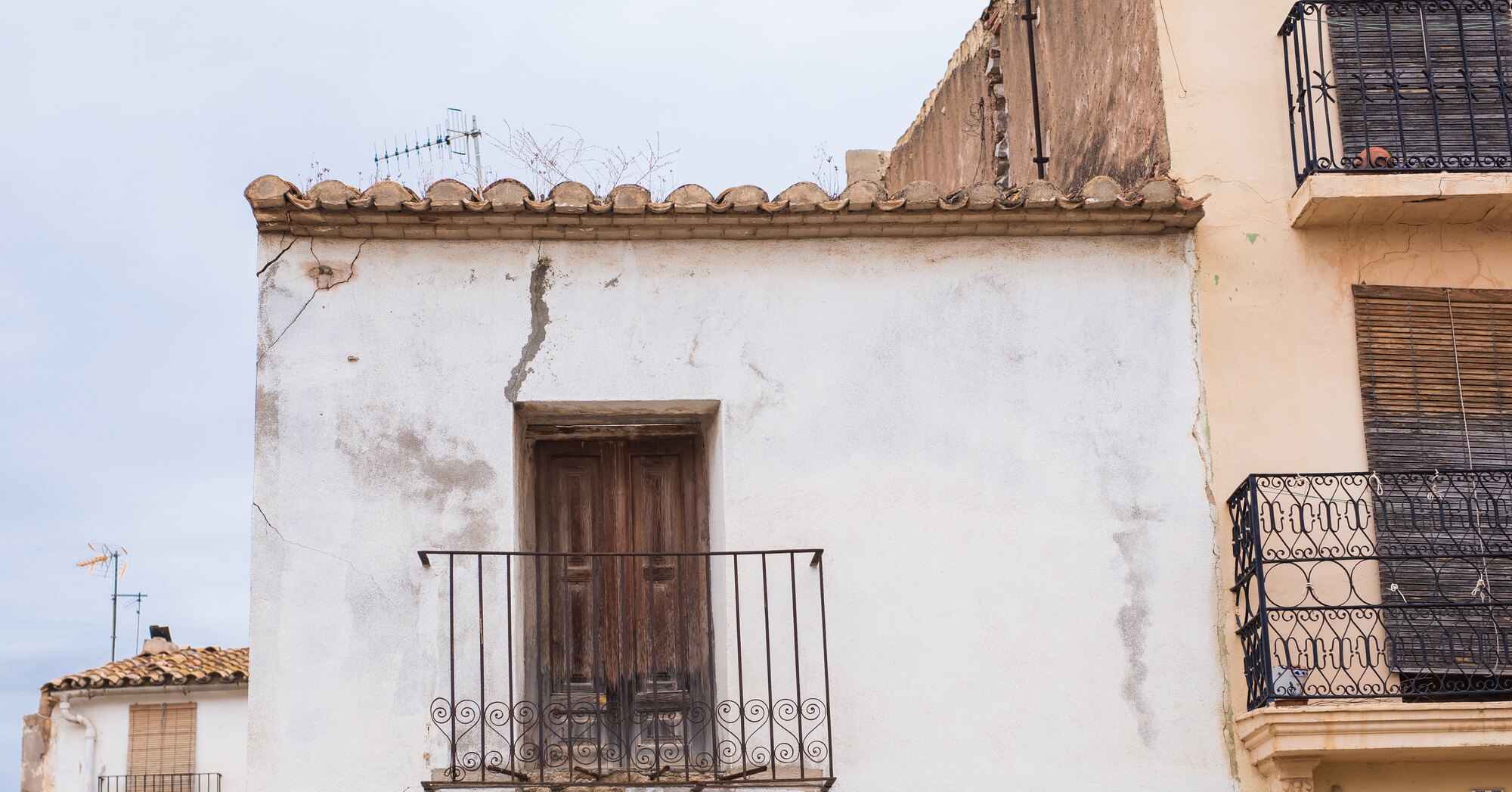
Picture a flat in Corralejo that passes from a mother to her two children, and that they sell a year later. Two taxes look at that sale, and both start from one figure that was fixed long before the buyer appeared: the value the flat was given in the inheritance-tax return. This note follows that figure from the inheritance to the sale: the income-tax gain, the municipal plusvalía, what changes for a seller who lives abroad, and why declaring a low value on inheriting is usually the expensive choice.
Death is not a sale
When the owner dies, no capital gain is taxed on the estate. The income-tax act lists, among the cases with no gain or loss, this one: Con ocasión de transmisiones lucrativas por causa de muerte del contribuyente, on transfers without payment by reason of the taxpayer's death (Ley 35/2006, article 33.3.b). Whatever the flat gained in the parents' hands is never taxed as their income. The heir starts again, with a new acquisition date, the day of the death, and a new acquisition value.
The value you inherit at
For the heir's future gain the acquisition value is not what the parents paid. Where a property was acquired without payment, the act takes as its values aquéllos que resulten de la aplicación de las normas del Impuesto sobre Sucesiones y Donaciones, sin que puedan exceder del valor de mercado, those that result from applying the rules of inheritance and gift tax, without exceeding market value (article 36). To that figure are added the gastos y tributos inherentes a la adquisición, the expenses and taxes inherent in the acquisition, that the heir paid (article 35.1.b). The tax directorate listed them in a binding ruling of 5 February 2026 (V0231-26): the share of the inheritance tax that corresponds to the property, the notary, the land registry, the agent and the adviser, and the municipal plusvalía paid on inheriting. It added that the heir must be able to prove each one.
The inheritance-tax rules, in turn, value real estate at a figure the heir does not choose: su valor será el valor de referencia previsto en la normativa reguladora del catastro inmobiliario, its value shall be the reference value laid down in the cadastre rules, at the date of the death, or the declared value when that is higher (Ley 29/1987, article 9.3). How that figure is built and how it is challenged is in our note on the reference value.
Why a low value is the expensive choice
In the Canaries the arithmetic is unusual. Heirs in groups I, II and III, which cover descendants, the spouse, ascendants and the closer collateral relatives, apply una bonificación del 99,9 por 100 de la cuota tributaria, a rebate of all but a thousandth of the tax due on what they inherit (Canary Decreto Legislativo 1/2009, article 24 ter, in its wording since September 2023). Where that rebate applies, a higher value in the inheritance return costs almost nothing, and every euro of it comes off the gain on the day the flat is sold. The saving from declaring low is a thousandth of the inheritance tax on the difference; the cost is the income tax on the difference itself.
Two limits go with that. The value cannot exceed market value, so this is no licence to inflate it, and a value above the reference value should be documented. And the rebate belongs to the Canary rules, which do not reach every inheritance: our note on filing inheritance tax in the Canaries explains when they apply and to whom.
The gain and its tax
The gain is the transfer value less the acquisition value (article 34). The transfer value is the real price, never below market value, less the expenses and taxes of the sale that the seller bore (article 35.2), the plusvalía of the sale among them. A resident declares the gain in the savings base of the yearly return, where the scale runs from 19 per cent on the first euros to 30 per cent on the part above 300,000 euros (articles 66 and 76). The exemptions for a seller's own home, being over sixty-five or reinvesting in another home, are in our note on selling as a resident; an inherited flat can use them only if it had become the heir's own habitual home.
One old rule still matters for inheritances from long ago. Where the property was acquired before 31 December 1994, part of the gain is reduced by the transitional coefficients of the act, within the limits that provision sets (ninth transitional provision).
The plusvalía, twice
The municipal tax on the increase in value of urban land is charged on each transfer, and an inherited flat that is sold meets it twice. On the inheritance the taxpayer is the heir, with six months to declare, which can be extended to a year on request; on the sale it is the seller, with thirty working days (Real Decreto Legislativo 2/2004, articles 106 and 110). For the sale the years are counted from the death, not from the parents' purchase.
Two rules protect the seller, and both use the inherited value. There is no tax where there was no increase between acquisition and transfer, and for a property acquired without payment the value compared is el declarado en el Impuesto sobre Sucesiones y Donaciones, the one declared for inheritance and gift tax (article 104.5). And where the real increase is smaller than the base that the formula gives, the taxpayer can ask for the other figure, and then se tomará como base imponible el importe de dicho incremento de valor, the amount of that increase is taken as the base (article 107.5).
The formula itself is about to move. It multiplies the cadastral value of the land by a coefficient for the years the property was held, and the law caps that coefficient for each period. For transfers from 1 December 2026 the caps are new: under one year the cap rises from 0.15 to 0.17, and for twenty years or more it falls from 0.40 to 0.30 (article 107.4, as amended by Real Decreto-ley 29/2026). The history of that table is in our note on the coefficients.
When the seller lives abroad
An heir who is not resident in Spain works out the gain by the same rules (Real Decreto Legislativo 5/2004, article 24.4) and pays 19 per cent of it (article 25.1.f). At the notary the price arrives short: el adquirente estará obligado a retener e ingresar el 3 por ciento, the buyer must withhold and pay in that percentage of the agreed price on account of the seller's tax (article 25.2). The seller settles the difference on form 210, and when the gain is small, as it often is soon after an inheritance, most of the retention comes back, as our note on the retention shows. The plusvalía changes hands as well. The buyer becomes the substitute for the taxpayer before the town hall cuando el contribuyente sea una persona física no residente en España, when the taxpayer is an individual not resident in Spain (Real Decreto Legislativo 2/2004, article 106.2), so the buyer will want that tax calculated before the signing.
Before you sign the sale
- Find the inheritance return. The value declared there is where your acquisition value starts.
- Add what you paid to inherit. Inheritance tax, notary, registry, adviser and the plusvalía of the inheritance, with their receipts.
- Check the reference value. The Catastro's figure at the date of the death, not today's.
- Count the years from the death. For the gain and for the plusvalía of the sale.
- Ask the town hall for both figures. The formula and the real increase; the lower one is the base.
- Look at the date of the deed. From 1 December 2026 the caps on the coefficients are different.
- If you live abroad, expect the retention. It is settled afterwards on form 210.
- If you have not inherited yet, value with care. Market value, documented, is the ceiling.
The inherited property at a glance
| Question | The rule |
|---|---|
| Gain at the death | None: the transfer on death produces no gain or loss |
| The heir's acquisition date | The day of the death |
| The heir's acquisition value | The value under inheritance-tax rules, never above market value |
| What is added to it | Inheritance tax, notary, registry and the plusvalía of the inheritance, if proved |
| Inheritance-tax value of real estate | The Catastro's reference value, or the declared value if higher |
| Canary rebate, groups I to III | 99.9 per cent of the tax due |
| Tax on the gain, resident | The savings scale, from 19 to 30 per cent |
| Tax on the gain, non-resident | 19 per cent; the buyer withholds 3 per cent of the price |
| Plusvalía on inheriting | The heir, within six months |
| Plusvalía on selling | The seller, within thirty working days; the buyer as substitute if the seller lives abroad |
| No increase in value | No plusvalía, measured from the value declared on inheriting |
What our advisory desk does
The firm's tax advisory desk in Fuerteventura prepares and files income tax, and for an inherited property that means working out the gain from the inheritance papers before the sale is signed, filing it afterwards and explaining the numbers in plain language. We represent clients before both tax agencies in queries and requirements, we work from our offices in Caleta de Fuste and Costa Calma, and we reply within one business day. If you have inherited a property and are thinking of selling it, write to us with the inheritance deed, the tax return filed at the time and the offer you have received.
Common questions
Is there tax on the gain my parents made while they owned the flat?
No income tax: a transfer on death produces no gain or loss, and your own gain is counted from the value at which you inherited. The municipal plusvalía is different. On the inheritance the town hall counts the years since your parents acquired the flat, and you, the heir, are the taxpayer.
I declared a low value when I inherited. Can I use the real one now?
The act points to the value that results from the inheritance-tax rules, which for real estate is the Catastro's reference value at the date of the death, or the declared value if that was higher. Whether a return already filed can still be corrected depends on its date and on what was declared, so bring it to an adviser before you sign the sale.
We are three heirs. Who declares the gain?
Each of you, for your own share. Each heir has an acquisition value and expenses of his or her own, and each is taxed by his or her own residence: the savings scale for residents, 19 per cent for those who live abroad.
I am selling six months after the death at the value I declared. Do I pay anything?
If the price equals your acquisition value plus the expenses, there is no gain to tax; a seller who lives abroad still sees the retention withheld and asks for it back on form 210. For the plusvalía of the sale, declare the transfer and show both values: with no increase there is no tax.
Does the Canary rebate mean the value does not matter?
The opposite. Where the rebate applies, it makes a correct, documented value almost free on the day you inherit, and that value is what you subtract from the price on the day you sell.
Facts verified on 16 November 2026 (Ley 35/2006, articles 33 to 36, 66 and 76 and ninth transitional provision; Ley 29/1987, article 9; Real Decreto Legislativo 2/2004, articles 104, 106, 107 and 110; Real Decreto Legislativo 5/2004, articles 24 and 25; Canary Decreto Legislativo 1/2009, article 24 ter; binding ruling V0231-26). General information, not tax advice: the figures of each inheritance and each sale decide the result.
Keep reading
More from the blog
 Taxes November 25, 2026
A requirement from the Spanish tax agency: the ten days, how to ask for more time, how to answer and what silence costs
A requirement is a question with a deadline, not a fine. The period is the one in the letter, never less than ten working days from the day after notification; it can be extended once, by half, if you ask before the last three days. The answer is filed online against the CSV of the notice, with only what the rules require. Not answering costs 150 euros the first time, 300 the second and 600 the third, and the check goes on with the data the administration already holds. 11 min read
 Taxes November 24, 2026
Winning the Christmas lottery in Spain: the 20 per cent, shared tickets and what a non-resident can claim back
A Spanish lottery prize pays a special levy of 20 per cent on what exceeds 40,000 euros per ticket, withheld by the payer, and stays out of the income-tax return. Sharing a ticket does not multiply the exemption, and whoever collects for a group must be able to prove the sharing, so the list of participants is made before the draw. A winner who lives abroad bears the same withholding and can often claim it back under a tax treaty with form 210. 9 min read
 Business November 23, 2026
Lending to your own company, or borrowing from it: the contract, the market interest, the withholding and the forms
Money that moves between a small company and its partner is a contract between two persons. With a quarter of the company or a director's post, tax law values the loan at market interest whatever was signed; the company withholds tax on the interest it pays; a loan from the company needs a specific resolution of the general meeting; the transfer tax is exempt, but form 600 is filed within a month in the Canary Islands; and form 232 is due in November. 11 min read