
Crypto in your Spanish tax return, and what Hacienda sees: models 172, 173 and 721 today, DAC8 from 2027
For a Spanish tax resident, selling crypto, swapping one coin for another and receiving staking rewards are three different taxable events, each calculated by the taxpayer: oldest coins first, swaps at market value, rewards valued the day they arrive. The savings scale runs from 19 to 30 %. Spanish providers have reported balances and operations every January since 2024, and under DAC8 the first Europe-wide exchange, on the operations of 2026, is due by 30 September 2027.
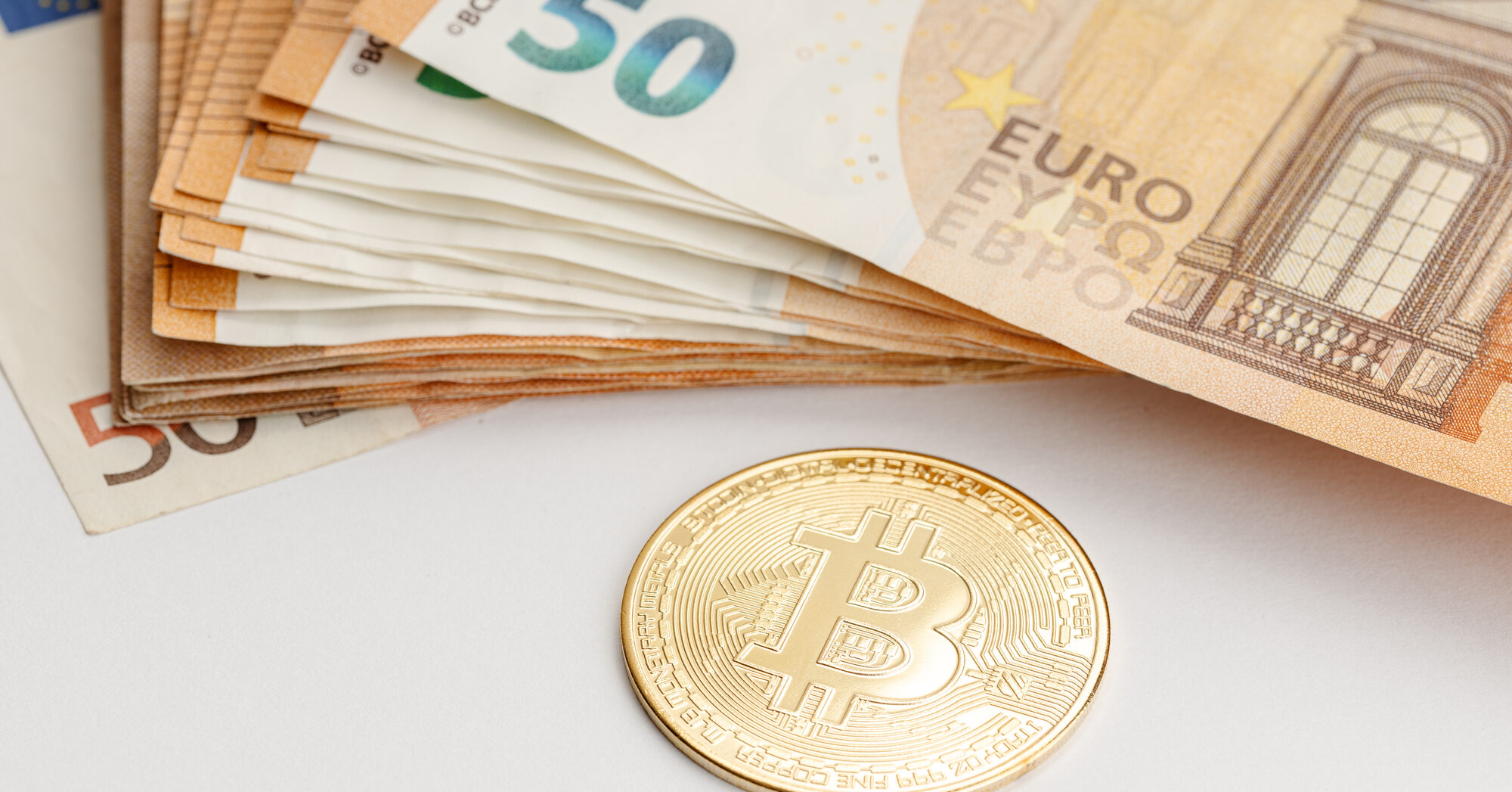
You bought bitcoin in 2021 on an exchange based in another EU country, swapped part of it for ether in 2024, left the ether staked for a year and sold some of it for euros last spring to pay for a kitchen. If you are tax resident in Spain, that is not one taxable event but three kinds of them, a swap, a stream of rewards and a sale, each with its own rule in the income tax Act, and each calculated by you, because nobody withholds anything on the way. What has changed is who else knows. Spanish exchanges and custodians have reported balances and operations to the Tax Agency every January since 2024, and from 2027 the authorities of every EU country will pass on what their providers report about residents of Spain under the directive known as DAC8. This note sets out what is taxed and how it is worked out, following the rulings of the tax directorate (the DGT) read for this piece, and what Hacienda sees, today and next year. Quotations are in Spanish with the reading in English.
What the Act calls it: an asset, and every change is an event
For income tax a cryptocurrency is neither money nor a security: the DGT treats it as an intangible asset (ruling V0648-24, which restates earlier ones). That places it under the general rule on capital gains: Son ganancias y pérdidas patrimoniales las variaciones en el valor del patrimonio del contribuyente que se pongan de manifiesto con ocasión de cualquier alteración en la composición de aquél, gains and losses are the changes in the value of the taxpayer's assets that come to light whenever their composition is altered (Ley 35/2006, article 33). Holding is not an alteration; selling, swapping and spending are. Everything below assumes a private investor who is resident in Spain, a status our note on the 183-day rule explains, and not someone who does this as an organised business.
Selling for euros: coin by coin, oldest first
A sale for euros produces a gain or a loss equal to the difference between what the units cost and what they fetched, with the fees paid on both sides included when they are tied to the operation (articles 34 and 35). Two rules of method decide the figure. The calculation is made separately for each type of coin. And when you sell part of a holding bought at different times, debe considerarse que las criptomonedas que se transmiten son las adquiridas en primer lugar, the coins sold must be taken to be those acquired first (ruling V0648-24). The rule runs across all your accounts, because buying on different exchanges no constituye una circunstancia que altere la homogeneidad de las referidas monedas virtuales, is not a circumstance that alters the homogeneity of the coins (ruling V1604-18).
An example. You bought half a bitcoin for €10,000 in 2021 and another half for €15,000 in 2023. In 2026 you sell 0.6 for €36,000. The units sold are the whole of the first purchase and a fifth of the second: their cost is €10,000 plus €3,000, and the gain is €23,000, whichever exchange each purchase sat on.
Swapping one coin for another is a sale
The step most people miss is the swap. Exchanging one cryptocurrency for another is a barter, and the Act taxes it as a disposal of the coin you hand over: the gain or loss is la diferencia entre el valor de adquisición del bien o derecho que se cede y el mayor de los dos siguientes, the difference between the acquisition value of the asset given up and the higher of two figures, the market value of what you give and the market value of what you receive (article 37). No euro has to reach a bank account. The value used in the swap then becomes the cost of the coin received, for the day you sell it in turn (rulings V0648-24 and V1551-25). The same reasoning reaches liquid staking: tanto el intercambio inicial de ETH por rETH, como el posterior intercambio de rETH por ETH (o por otros criptoactivos) constituyen permutas, both the initial exchange of ETH for rETH and the later exchange of rETH for ETH, or for other crypto-assets, are swaps (ruling V0612-26).
Staking, lending and yields: income, valued the day it arrives
Rewards for leaving coins locked are not gains but income from capital. The DGT places the rewards of staking through a platform, of lending coins and of liquidity pools among the Rendimientos obtenidos por la cesión a terceros de capitales propios, income obtained from ceding one's own capital to third parties (article 25), paid in kind: the rewards se valorarán por su valor de mercado en euros el día de su percepción, are valued at their market value in euros on the day they are received, and go into the savings base (rulings V0648-24 and V0612-26). Platform fees and the interest paid on borrowed coins are not deductible from this income; a penalty for unlocking early simply reduces the reward. Staking directly on the network has received the same answer in the cases the DGT examined: locking coins and waiting to be picked by the protocol is not, by itself, a business.
When rewarded units are later sold, the sale is a gain or loss like any other, calculated oldest first with the rest of your holding of that coin (ruling V5017-26). The rulings we read do not say in terms what those units cost; for coins taxed in the general base the DGT does say it, the value already taxed is the cost, and we apply the same logic to rewards.
Airdrops and rewards for nothing: the general scale
Coins received without handing anything over, an airdrop or a promotional reward, follow a third rule: se computará como ganancia patrimonial el valor de mercado de aquéllos, their market value is counted as a capital gain (article 37). Because that gain does not come from a transfer, it goes into the general base and is taxed on the progressive scale with your salary or pension, not into the savings base (ruling V0648-24). The DGT adds a condition that matters for tokens nobody trades yet: the rule applies in so far as a market value in euros can be determined (ruling V5017-26).
The rates, and what a loss is worth
Gains from sales and swaps and income from staking and lending all land in the savings base, taxed on this scale (articles 66 and 76):
| Slice of the savings base | Rate |
|---|---|
| Up to €6,000 | 19 % |
| From €6,000 to €50,000 | 21 % |
| From €50,000 to €200,000 | 23 % |
| From €200,000 to €300,000 | 27 % |
| Above €300,000 | 30 % |
On the €23,000 of the example, with no other savings income, that is €1,140 on the first €6,000 and €3,570 on the rest: €4,710.
Losses count. Within the year, losses on coins are set against gains on anything else in the savings base, from shares to a flat. If losses still exceed gains, the excess can absorb up to 25 per cent of the year's positive income from capital, and what remains se compensará en los cuatro años siguientes, is offset over the following four years (article 49). Two cautions. A loss has to be proved, with the exchange's records, like any other. And the Act postpones the loss on an asset bought back within the following year, and has a two-month version of the same rule written for listed securities (article 33); we found no ruling that applies either to coins, so a sale in December followed by a purchase in January is not a plan to make without advice.
What Hacienda sees today: models 172, 173 and 721
Providers resident in Spain, and the Spanish branches of foreign ones, that hold keys for clients or exchange coins must tell the Tax Agency what those clients hold and do (Ley 35/2006, additional provision thirteen; Real Decreto 1065/2007, articles 39 bis and 39 ter). Two returns carry it, both filed each January and for the first time in January 2024 (Orden HFP/887/2023). Model 172 gives each client's balance per coin at 31 December and its value in euros. Model 173 gives every acquisition, sale, swap and transfer: the date, the type and number of units, the value in euros and the fees. The third return is yours: model 721, for coins kept with providers abroad, which our note on models 720 and 721 covers.
One thing these returns do not do is fill in your tax return. Asked whether the data would appear in the draft, the DGT declined to answer (ruling V0612-26). Do not wait for the draft to tell you what to declare.
What changes with DAC8
DAC8 is Council Directive (EU) 2023/2226. It obliges crypto-asset service providers that serve residents of the Union to identify their users and to report, for each user and each type of asset, the year's totals: what was bought and sold for ordinary money, the value of swaps between assets, payments made in crypto and transfers. The authority that receives the report passes it to the country where the user lives en un plazo de nueve meses a partir del final del año civil, within nine months of the end of the calendar year; the first year covered is 2026, so the first exchange is due by 30 September 2027. The directive had to be written into national law last year: Member States adoptarán y publicarán a más tardar el 31 de diciembre de 2025 las disposiciones legales, reglamentarias y administrativas necesarias, shall adopt and publish by 31 December 2025 the laws, regulations and administrative provisions necessary.
Spain's position on 4 October 2026 is this: the consolidated texts of the General Tax Act and of its management regulation, as the Official Gazette publishes them, contain no provision transposing the directive, and the only crypto reporting they carry is the domestic one described above. We therefore cannot point to the Spanish article that will bind a provider established here. That does not shield a Spanish resident who uses a provider reporting in another Member State: the directive makes that State send the data to the State of residence, whatever the state of Spain's own law. The practical reading is simple. Assume that the operations of 2026 on any exchange serving Europeans will be in Hacienda's hands in the autumn of 2027.
If past years are missing
Returns for earlier years can still be put right. A supplementary return filed before the Tax Agency asks carries a surcharge that starts at 1 per cent per month of delay instead of a penalty, as our note on filing late explains; once a requirement arrives, that door closes. The records needed are the same in either case: every purchase with its date and its cost in euros, every swap with the market value of that day, every reward with its value on the day it arrived.
In crypto the taxable moment is the swap or the sale, never the transfer to your bank. Keep the euro value of each operation on its own date: it is the figure the return asks for and the one the exchange reports.
What our advisers do
Our tax advisers in Caleta de Fuste and Costa Calma prepare the income tax return each spring, and with crypto most of the work comes before it: rebuilding the history coin by coin from the exchanges' files, valuing swaps and rewards in euros on their dates, and reconciling the result with what the providers report. We represent clients before the Tax Agency when a query or a requirement arrives. The service is described on the tax advisory page, and a first meeting can be booked online.
Common questions
I only moved coins from an exchange to my own wallet. Is that taxable?
A transfer between two wallets that are both yours does not alter what you own, so it produces no gain. The provider may still report it, so keep the record that shows both ends are yours.
I swapped bitcoin for ether and never touched euros. Do I owe tax?
Yes, if the bitcoin was worth more than it cost you. The swap is taxed as a disposal of the bitcoin at the market value of that day.
How are staking rewards taxed?
As income from capital, valued in euros on the day each reward arrives, in the savings base. Selling the rewarded units later is a separate gain or loss.
Can I offset crypto losses against my salary?
No. Losses on sales and swaps are set against other gains of the savings base, then against up to 25 per cent of income from capital such as interest or dividends, and the rest is carried forward four years.
Has Spain implemented DAC8?
On 4 October 2026 we find no transposing provision in the consolidated General Tax Act or its regulation. Providers reporting in other Member States follow their own country's rules, and the data on Spanish residents is sent to Spain; the first exchange is due by 30 September 2027.
Facts verified in October 2026 (Ley 35/2006, articles 25, 33 to 35, 37, 43, 46, 49, 66 and 76 and additional provision thirteen; Real Decreto 1065/2007, articles 39 bis and 39 ter; Orders HFP/886/2023 and HFP/887/2023; Council Directive (EU) 2023/2226, article 2, and article 8 bis quinquies and annex VI of Directive 2011/16/EU as it amends them; binding rulings V1604-18, V0648-24, V1551-25, V0612-26 and V5017-26 of the Dirección General de Tributos, all as they read on 4 October 2026). The figures of the example are invented to show the method; this note is general information, not advice on a particular return.
Keep reading
More from the blog
 Business October 12, 2026
The Social Security regularisation letter: how the autónomo quota is squared with your real income
The quota an autónomo pays during the year is provisional: the Treasury of the Social Security settles it against the income tax return and sends a refund, a bill or nothing. How the figure is built (net return plus contributions, less 7 %, per day registered), the 2025 table of tranches, a worked example of €1,900 a month on the minimum base, who is outside, how it is declared in the next tax return, and what can still be changed before the year closes. 12 min read
Business October 12, 2026
The Social Security regularisation letter: how the autónomo quota is squared with your real income
The quota an autónomo pays during the year is provisional: the Treasury of the Social Security settles it against the income tax return and sends a refund, a bill or nothing. How the figure is built (net return plus contributions, less 7 %, per day registered), the 2025 table of tranches, a worked example of €1,900 a month on the minimum base, who is outside, how it is declared in the next tax return, and what can still be changed before the year closes. 12 min read
 Taxes October 9, 2026
Paying Google, Meta or a foreign software licence from the Canaries: the IGIC you self-assess
An invoice from Google, a software house in Dublin or a designer in Madrid reaches a Canary business with no tax on it, and the 7 % IGIC is then the customer's to declare. How the reverse charge works in the Modelo 420, why it is a real cost under the REPEP, for retailers and for exempt activities (Modelo 412), what replaced the self-invoice, and the fine of 75 % for leaving the line out. 16 min read
Taxes October 9, 2026
Paying Google, Meta or a foreign software licence from the Canaries: the IGIC you self-assess
An invoice from Google, a software house in Dublin or a designer in Madrid reaches a Canary business with no tax on it, and the 7 % IGIC is then the customer's to declare. How the reverse charge works in the Modelo 420, why it is a real cost under the REPEP, for retailers and for exempt activities (Modelo 412), what replaced the self-invoice, and the fine of 75 % for leaving the line out. 16 min read
 Property October 8, 2026
Imputed income on a second home in Spain: 2 % or 1.1 %, the 2012 window and the sliding scale Congress repealed
A second home in Spain is taxed even when it stands empty: 2 % of its cadastral value, or 1.1 % where the town's values came into force in the last ten years, declared by non-residents on the Modelo 210. Real Decreto-ley 26/2026 kept the 1.1 % for towns revalued since 2012 and wrote a sliding scale for 2027; Congress repealed it on 2 October 2026. The percentages of the six municipalities of Fuerteventura, what the scale would have changed, the filing dates and what to check before 31 December. 8 min read
Property October 8, 2026
Imputed income on a second home in Spain: 2 % or 1.1 %, the 2012 window and the sliding scale Congress repealed
A second home in Spain is taxed even when it stands empty: 2 % of its cadastral value, or 1.1 % where the town's values came into force in the last ten years, declared by non-residents on the Modelo 210. Real Decreto-ley 26/2026 kept the 1.1 % for towns revalued since 2012 and wrote a sliding scale for 2027; Congress repealed it on 2 October 2026. The percentages of the six municipalities of Fuerteventura, what the scale would have changed, the filing dates and what to check before 31 December. 8 min read